


Materiality Assessment
The Company conducts an annual review and identification of material topics by analyzing internal and external data including insights from stakeholders and external experts. This process aligns with global sustainability trends and benchmarks against peers in the same and related industries.
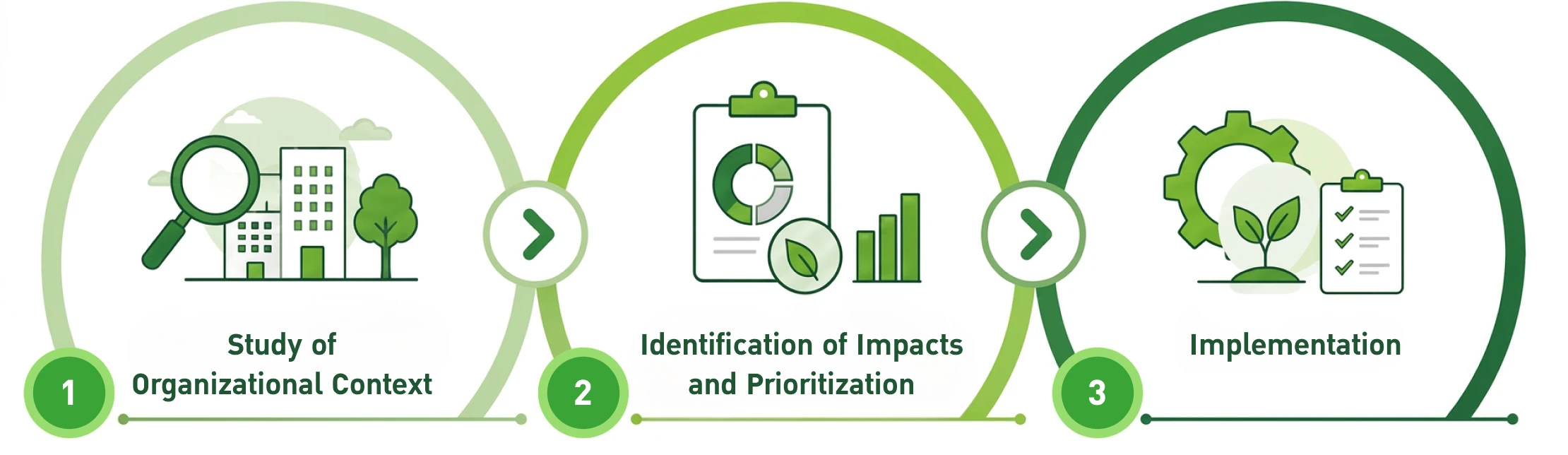
While utilizing the GRI Standards 2021 as the primary framework consisting of the following key steps:
Environment
| Materiality Topics | Value Chain | ||
|---|---|---|---|
| Upstream | Operations | Downstream | |
| Climate Change Management | |||
Social
| Materiality Topics | Value Chain | ||
|---|---|---|---|
| Upstream | Operations | Downstream | |
| Occupational Health and Safety | |||
Governance and Economic
| Materiality Topics | Value Chain | ||
|---|---|---|---|
| Upstream | Operations | Downstream | |
| Innovation and Sustainable Investment | |||
| Sustainable Product and Service Development | |||
| Relationship Management and Responsibility to Customers | |||
- The strategic level for sustainable transition, consisting of 5 key material topics.
- The operational level for risk mitigation and business opportunity enhancement. This latter category comprises other material topics consistent with those in 2024, which the Company has continuously managed, including: Environmental Dimension - Air Quality Management, Waste Management, Water Management, Oil and Chemical Spill Management, and Biodiversity; Social Dimension - Human Resource Management, Community Development and Employment, Energy Accessibility, Human Rights, Labor Rights and Labor Practices, and Land and Resource Rights; Governance and Economic Dimension - Corporate Governance and Ethics, Anti-competitive Behavior, Sustainable Supply Chain, and Digital Transformation and Cybersecurity.