


Occupational Health and Safety
Materiality Topics
Occupational Health and Safety




- Operations

Management Approach
Security, safety, and occupational health are critical issues in the petroleum industry, as accidents during operations, production processes, transportation, and distribution may impact stakeholders. These impacts include injuries, loss of life, and damage to the assets of workers and surrounding communities, as well as business impacts from production interruptions for incident rectification and stakeholder remediation, and environmental impacts such as pollution leaks.
The Company has established a Occupational Health, Safety, Environment, and Energy (HSEE), assigning employees and contractors duties and responsibilities regarding safety for themselves and their colleagues. This adheres to local laws and international standards such as ISO 45001 while consistently aligning operations with the Process Safety Management (PSM) system.
Strategies and Actions
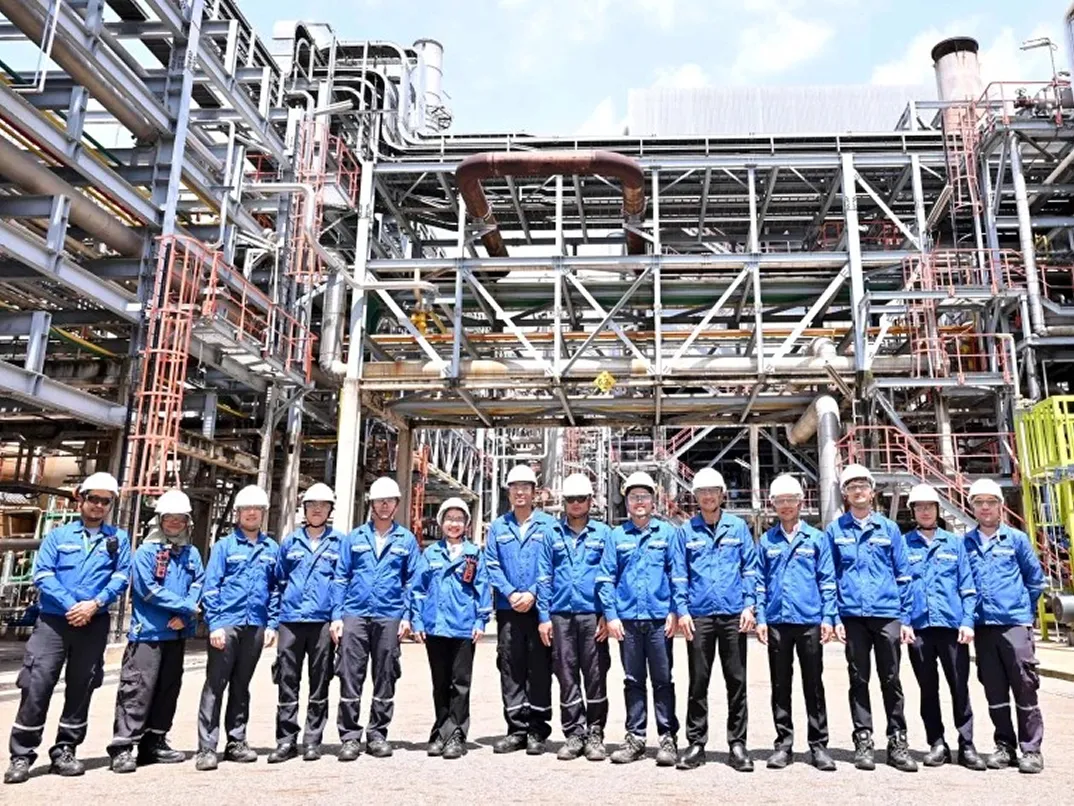
Safety Promotion during Work
To ensure that employees at all levels and contractors possess safety awareness, knowledge, and understanding, and perform their work safely every day:
- Promotion of a safety culture, such as executive Line Walks in operational areas.
- Monthly meetings with Contractor Safety Officers and weekly joint area inspections with contractors.
- Presenting the Contractor Safety Management Recognition Award to contractors who follow procedures correctly, serving as role models for colleagues.
Safety Promotion beyond Working Hours
Campaigning for safe driving practices, mandating the use of helmets for every motorcycle ride, and fastening seatbelts before every journey.
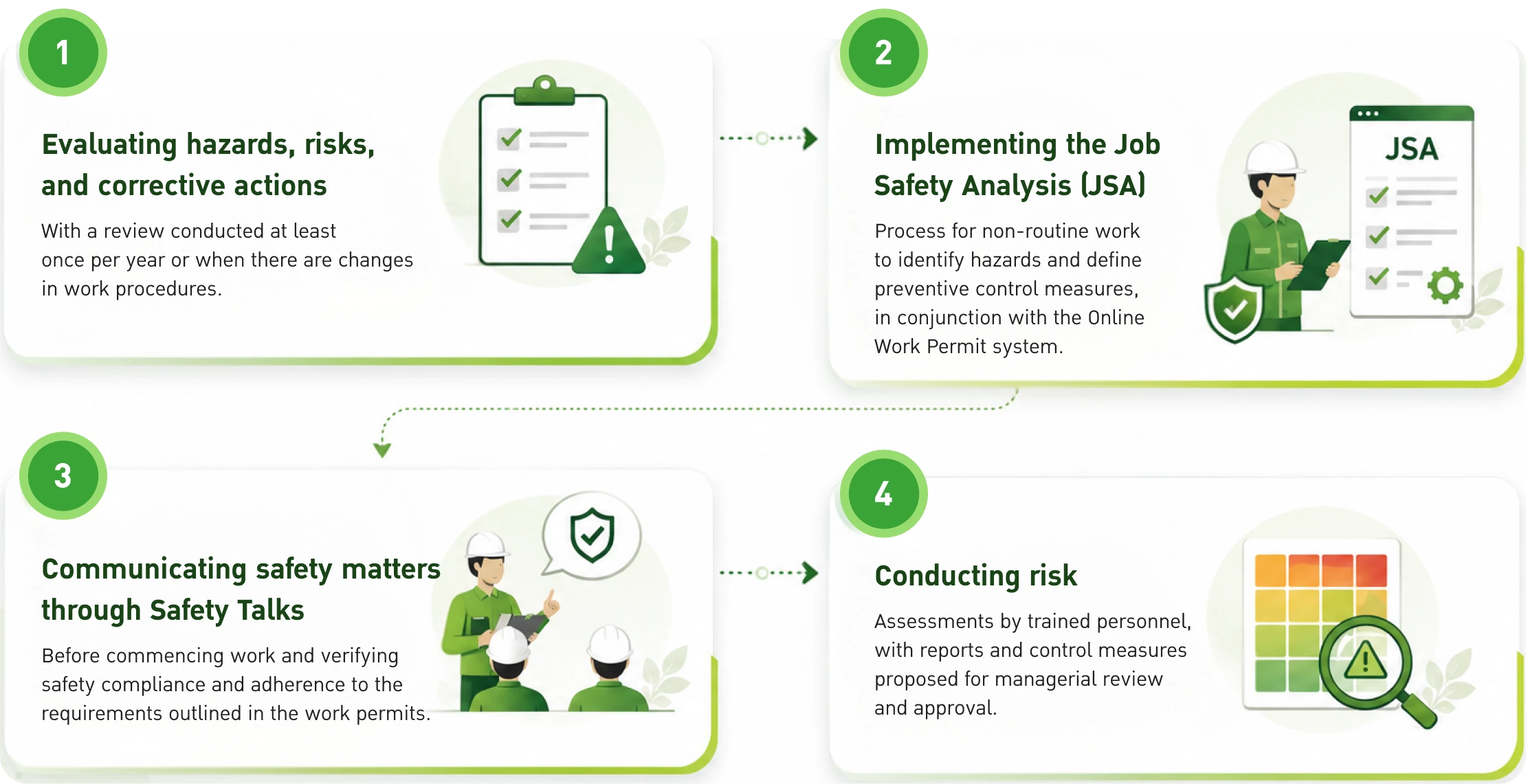
Identification of Workplace Hazards, Risk Assessment, and Incident Investigation, The key processes include the following:
Promotion of Worker Health
- Nurses and doctors are stationed every working day at the Company’s medical room.
- Provision of annual health check-up benefits.
- Employee health promotion projects to prevent non-communicable diseases (NCDs) include monthly physical activities such as step count accumulation, running, simple cardio, and E-Sport competitions like dance battles and boxing. Additionally, there are activities promoting vitamin-rich diets through public relations campaigns, such as “Change to be Good (‘D’) Enough” to highlight the value of Vitamin D, and “Swap Sweet Treats for Vegetables to Cut Sugar” to reduce sugar consumption.
- Organizing hearing conservation activities to raise awareness about the importance of hearing health.
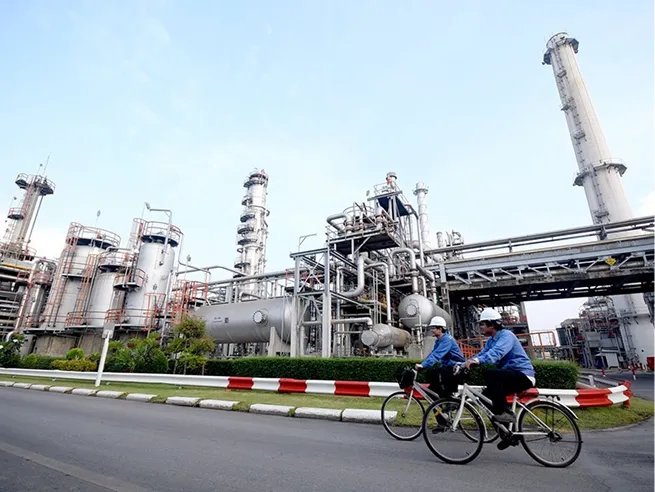
Process Safety Management Operation
Implementation of Process Safety Management (PSM), including the establishment of the PSM Governance Committee (PSM GC), and the definition of safety values, namely the 3E principles.
Everyone Goes Home Safely Every Day
Environment and Asset Are Protected

Efficient and Reliable Operation
The ultimate objective is to prevent the occurrence of Process Safety Events Tier 1 and Tier 2. The Company also implements measures to ensure emergency preparedness and response through regular inspections to maintain firefighting equipment in a constant state of readiness, as well as training and emergency drills for various scenarios.

Targets and Performance
Our commitment to creating a sustainable impact is reflected in our ESG goals and performance.
Targets

Employees’ Total Recordable Injury Rate (TRIFR) equals
Employees’ Lost Time Injury Frequency Rate (LTIFR) equals
Employees’ Fatality Rate equals
Employees’ Occupational Illness Frequency Rate (OIFR) equals
Process Safety Event Tier 1 equals
Process Safety Event Tier 2 equals
Performance

| Employee Safety | 2025 |
|---|---|
|
Employees’ Total Recordable Injury Rate (TRIFR) (case/million working hours) |
0 |
|
Employees’ Lost Time Injury Frequency Rate (LTIFR) (case/million working hours) |
0 |
|
Employees’ High-consequence Work-related Injuries (injuries where the worker cannot recover to pre-injury health status within 6 months) |
0 |
|
Employees’ Fatality Rate (case/million working hours) |
0 |
|
Employees’ Occupational Illness Frequency Rate (OIFR) (case/million working hours) |
0 |

| Contractor Safety | 2025 |
|---|---|
|
Contractors’ Total Recordable Injury Rate (TRIFR) (case/million working hours) |
0.85 |
|
Contractors’ Lost Time Injury Frequency Rate (LTIFR) (case/million working hours) |
0.21 |
|
Contractors’ High-consequence Work- related Injuries (injuries where the worker cannot recover to pre-injury health status within 6 months) (case) |
0 |
|
Contractors’ Fatality Rate (case/million working hours) |
0 |
Remark: Safety statistics cover Bangchak Phra Khanong Refinery, Head Office, and Bang Pa-in Terminal.
- Process Safety Event Tier 1 equals zero
- Process Safety Event Tier 2 equals zero